




Designing Molecular Glues
Rational Design and Proximity-induced Degradation Strategies
March 22, 2023 ALL TIMES EDT
Hetero-bifunctional protein degraders like proteolysis targeting chimeras (PROTACs) have found their way into the clinic by utilizing the body’s natural disposal system to tag and degrade unwanted proteins implicated in various diseases. These degraders are large molecules consisting of a E3 binding ligand and a ligand binding the target protein, coupled together by a linker. On the other hand, monovalent degraders or molecular glues consist of a single degrader molecule that attaches to both the E3 ligase and target protein and tend to be smaller and more drug-like. These glues have been discovered serendipitously in the past, however recently, there are efforts being made to try and design them more rationally. Cambridge Healthtech Institute’s inaugural virtual conference discusses some of these innovative design strategies and screening methods to discover and optimize molecular glues for therapeutic purposes. The conference features live talks given by experts and includes online discussions for active networking and idea-generation.

Wednesday, March 22

Welcome Remarks by Conference Organizer

Meet and Greet Networking

EFFECTIVE TOOLS & ASSAYS FOR MOLECULAR GLUES

Proteomics Toolbox for Characterizing Novel Protein Degraders

Photo of Fiona Pachl, PhD, Associate Principal Scientist, Chemical Biology and Proteomics, AstraZeneca Pharmaceuticals , Associate Principal Scientist , Chemical Biology & Proteomics , AstraZeneca Pharmaceuticals
Fiona Pachl, PhD, Associate Principal Scientist, Chemical Biology and Proteomics, AstraZeneca Pharmaceuticals , Associate Principal Scientist , Chemical Biology & Proteomics , AstraZeneca Pharmaceuticals

Targeted protein degradation by small molecules has shown consolidated promise as a new pharmacological approach. We give an overview of our lead generation cascades for the protein degradation modality with focus on proteomics strategies to define degraders selectivity and mechanism of actions. We discuss assay toolboxes and future direction of unbiased discovery of emerging molecular glue degraders and relationship between target and ligase to inform design.

Cereblon Covalent Modulation through Structure-Based Design of Histidine Targeting Chemical Probes

Photo of Radosław Nowak, PhD, Professor of Immune Engineering and Drug Discovery, University of Bonn , Professor , Immune Engineering and Drug Discovery , University Clinic Bonn
Radosław Nowak, PhD, Professor of Immune Engineering and Drug Discovery, University of Bonn , Professor , Immune Engineering and Drug Discovery , University Clinic Bonn

We describe first rational targeting of a specific histidine residue in a protein binding site using sulfonyl exchange chemistry. Using structure-based drug design, we incorporated sulfonyl fluoride and triazole reactive group into cereblon binders, resulting in potent covalent inhibitors and molecular glues through engagement of His353. Chemical probes and covalent labeling strategy described here will broadly impact this exciting area of therapeutic research.

Brainstorming Session

The brainstorming session is an informal, moderated discussion, allowing participants to exchange ideas and experiences and develop future collaborations around a focused topic. Each session will be led by a group of moderators who keep the discussion on track. To get the most out of this format, please come prepared to share experiences, be a part of a collective, problem-solving session, and participate in active idea sharing. 

BRAINSTORMING SESSION:
New Tools and Assays for Molecular Glue Discovery

Radosław Nowak, PhD, Professor of Immune Engineering and Drug Discovery, University of Bonn , Professor , Immune Engineering and Drug Discovery , University Clinic Bonn

Fiona Pachl, PhD, Associate Principal Scientist, Chemical Biology and Proteomics, AstraZeneca Pharmaceuticals , Associate Principal Scientist , Chemical Biology & Proteomics , AstraZeneca Pharmaceuticals

Markus Queisser, PhD, Scientific Director, Protein Degradation, GSK , Scientific Director , Protein Degradation , GSK

Session Break

OPPORTUNITIES FOR MOLECULAR GLUE-BASED THERAPIES

Characterisation of Glue Degrader Ternary Complex Dynamics and Their Effect on Target Degradation

Photo of Matthias Brand, PhD, Co-Founder and Vice President Biology, Proxygen GmbH , Co-Founder and VP Biology , Proxygen GmbH
Matthias Brand, PhD, Co-Founder and Vice President Biology, Proxygen GmbH , Co-Founder and VP Biology , Proxygen GmbH

We found that the characterization of molecular glue degraders by cellular and biophysical methods revealed two distinct mechanisms of action. We also show that the ternary complex properties affect the target degradation underlining the importance of ternary complex stability and the degradation kinetics influences the optimal drug profile.

Protein-Protein Interfaces in Molecular Glue-Induced Ternary Complexes – What We Can Learn From Them and How They Guide Rational Design

Photo of Huan Rui, PhD, Senior Scientist, Amgen, Inc. , Senior Scientist , Amgen Inc
Huan Rui, PhD, Senior Scientist, Amgen, Inc. , Senior Scientist , Amgen Inc

Molecular glue degraders hold promise as a new generation of therapeutic agents, including those that can redirect the protein degradation machinery in a precise way. However, rational discovery of molecular glues is difficult in part due to the lack of understanding of the protein-protein interactions they stabilize. Here, we summarize the structures of known molecular glue-induced ternary complexes and the interface properties. Detailed analysis shows different mechanisms of ternary structure formation. Based on these mechanisms, we devise physics-based and deep learning-based complex prediction methods to highlight the potential of computational approaches in guiding rational molecular glue discovery.

Brainstorming Session

The brainstorming session is an informal, moderated discussion, allowing participants to exchange ideas and experiences and develop future collaborations around a focused topic. Each session will be led by a group of moderators who keep the discussion on track. To get the most out of this format, please come prepared to share experiences, be a part of a collective, problem-solving session, and participate in active idea sharing.

BRAINSTORMING SESSION:
Strategies to Design and Optimize Molecular Glues

Matthias Brand, PhD, Co-Founder and Vice President Biology, Proxygen GmbH , Co-Founder and VP Biology , Proxygen GmbH

Jesse Chen, PhD, Co-Founder & CTO, Triana Biomedicines, Inc. , Co Founder & Chief Technology Officer , Triana Biomedicines Inc

Huan Rui, PhD, Senior Scientist, Amgen, Inc. , Senior Scientist , Amgen Inc

Edmond Watson, PhD, Senior Scientist, Bristol Myers Squibb Co. , Senior Scientist , Protein Homeostasis , Bristol Myers Squibb Co

Summary of Key Takeaways

Closing Remarks by Conference Organizer

Close of Conference


Speaker Biographies

Matthias BrandMatthias Brand, PhD, Co-Founder and Vice President Biology, Proxygen GmBH
Matthias Brand, PhD, studied medical and molecular biotechnology in Milan (IT) and Zurich (CH). He specialized on targeted protein degradation via small molecules during his graduate studies with Georg Winter at CeMM in Vienna (AT). In particular, he worked on means to engineer selectivity into PROTACs and resistance mechanisms to this novel pharmacology. He furthermore contributed to the development of screening assays for the scalable identification of novel E3 modulators. Since 2020, he is VP Biology and co-founder of Proxygen, a biotech startup dedicated to the discovery and development of novel molecular glue degraders to treat cancer and other life-threatening diseases.
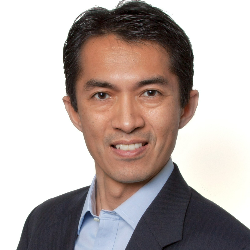

Jesse ChenJesse Chen, PhD, Co-Founder & CTO, Triana Biomedicines, Inc.
Jesse Chen is the Chief Technology Officer at Triana Biomedicines. He joined TRIANA in January of 2021. Jesse has more than a decade of discovery research and management experience, from early discovery through preclinical development. He joined RA Capital Management in 2019 as an entrepreneur-in-residence and co-founded TRIANA Biomedicines and Avilar Therapeutics. Prior to joining RA Capital, Jesse was Senior Director of Discovery at Kymera Therapeutics, responsible for building the company’s industry-leading targeted protein degradation platform and pipeline. Jesse also held various roles at Moderna Therapeutics and Millennium Pharmaceuticals, where he was responsible for developing novel platforms and leading discovery programs. Jesse received his Ph.D. from MIT and was a Harvard Origins Research Fellow.


Radoslaw NowakRadoslaw P. Nowak, PhD, Research Associate, Laboratory of Eric Fischer, Biological Chemistry & Molecular Pharmacology, Dana-Farber Cancer Institute
Radoslaw Nowak is part of Biochemistry and Structural Biology Group at the Center for Protein Degradation as well as a scientist in the laboratory of Eric Fischer at Dana-Farber Cancer Institute. His research interests revolve around transforming structural, biophysical, biochemical, and proteomic insights surrounding PROTACs and other degrader molecules into predictive computational framework to accelerate degrader discovery and validation. Dr. Nowak received his DPhil from University of Oxford in the group of Prof. Udo Oppermann working on development of inhibitors for histone lysine demethylases, a class of epigenetic readers.


Fiona PachlFiona Pachl, PhD, Senior Scientist, Chemical Biology and Proteomics, AstraZeneca
Fiona Pachl is a Senior Scientist at AstraZeneca, whose focus is on utilizing chemical biology and proteomics methods to investigate the selectivity and mechanism of small molecule protein degraders. Prior to joining AstraZeneca in 2017, she did a postdoctoral fellowship at Biogen and received her PhD from Technical University Munich, working in the lab of Prof. Dr. Bernhard Kuster.
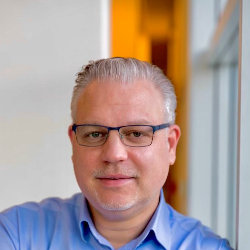

Markus QueisserMarkus Queisser, PhD, Scientific Director, Protein Degradation, GSK
Markus got fascinated by the process of protein degradation early on during his Master’s thesis at Free University in Berlin, where he worked on proteasomal functions and ubiquitin-binding proteins. He further gained broad knowledge in respiratory diseases, inflammation, and oncology while pursuing a Ph.D. in molecular biology and medicine of the lung in Germany and at Albert Einstein College of Medicine in New York. He moved on to a postdoctoral fellowship at Northwestern University in Chicago, where in collaboration with Noble Laureate Aaron Ciechanover, he discovered a hypoxia-regulated ubiquitin-ligase. Prior to joining GSK, he specialized in ubiquitin-ligase recruitment in ER-associated protein degradation at the Ludwig Institute for Cancer Research in Oxford. Currently, he is Scientific Director in the Protein Degradation Group, leading the technology team and leading multiple collaborations with biotech and academia.

Huan RuiHuan Rui, PhD, Senior Scientist, Amgen, Inc.
Huan Rui is a senior scientist at Amgen specializing in computational chemistry. She has a PhD in computational chemistry from University of Kansas and conducted her post-doctoral research at University of Chicago studying conformational transitions of membrane proteins and their implications on functions. Her research interests include using molecular dynamics and free energy simulations to study biological systems and applying machine-learning techniques to augment physics-based modeling. She currently leads the computational efforts for the induced proximity platform at Amgen.

Edmond WatsonEdmond Watson, PhD, Senior Scientist, Bristol Myers Squibb Co.
Edmond (Randy) received his graduate training in the lab of Brenda Schulman at St. Jude Children's Research Hospital in Memphis, Tennessee studying ubiquitination mechanisms of the Anaphase Promoting Complex and its transient partners. In 2016, he moved to the Max Planck Institute for Biochemistry in Munich Germany and began early training in cryo-electron microscopy. In late 2018, he started a postdoctoral fellowship in Gabe Lander's lab at Scripps Research, working directly with Bristol Myers Squibb to understand mechanistic consequences of liganding cereblon, and in 2022 he joined BMS directly to continue this and related work.


Next Generation Degraders and Glues