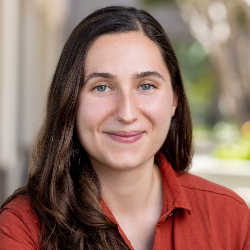
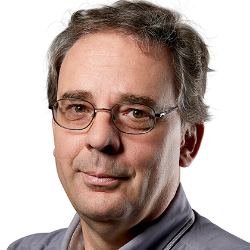
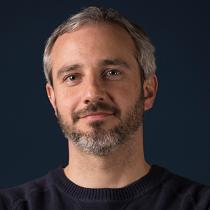
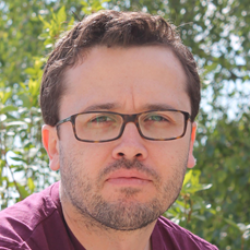
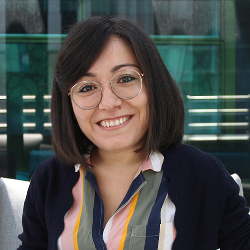
Summer Baker Dockrey, PhD, Principal Scientist, Medicinal Chemistry, Genentech, Inc. Principal Scientist Genentech Inc.
Summer Baker Dockrey is a Principal Scientist in Discovery Chemistry at Genentech in South San Francisco. She has worked on a number of discovery-stage projects with a focus on antibody-drug conjugates. Her research interests include PROTACs, targeted delivery, and protein engineering.
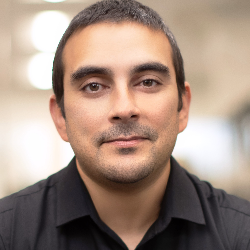
Rohan Beckwith, PhD, is Vice President of Chemistry at Neomorph bringing over 19 years of experience in Drug Discovery, 10 in the field of targeted protein degradation. He most recently served as a Director at the Novartis Institutes for BioMedical Research, where he was a key contributor in building a molecular glue degrader platform, from which he led efforts to establish drug discovery programs and delivered a clinical candidate. He has developed molecular glue degraders for CRBN, VHL and DCAF15 E3 ligases. In addition, Rohan has worked on over 20 research projects across various therapeutic areas. He has led multi-disciplinary teams in chemical biology and target identification efforts, as well as hit-to-lead and lead optimization. Prior to joining Novartis, Rohan conducted postdoctoral training with Prof. Huw Davies in the field of rhodium carbenoid-mediated C-H activation. He received his PhD in synthetic organic chemistry from University of Nottingham, U.K. and before that his MSci. Chem from Bristol University, U.K.
Alex Bullock, PhD, Principal Investigator, Centre for Medicines Discovery, University of Oxford Professor University of Oxford
Alex Bullock is a Professor of Structural and Chemical Biology at the Centre for Medicines Discovery, University of Oxford. He obtained his degree and PhD at the University of Cambridge working with Sir Alan Fersht. He subsequently held a Wellcome Fellowship for positions with David Baker at the University of Washington, Seattle, and then with Sir Peter Ratcliffe at the University of Oxford for work on VHL. He continued structural studies on E3 ligases as a group leader with the SGC until 2020 and is now within the EUbOPEN consortium. He has taken one target (non-E3) through to Phase 2 clinical trials.
John Christianson, PhD, Professor, NDORMS, University of Oxford Professor University of Oxford
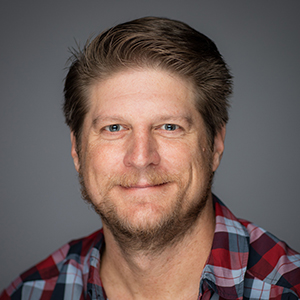
Professor Christianson received his PhD from the University of Chicago in Neurobiology, investigating the role of the ubiquitin-proteasome system (UPS) in ion channel biogenesis. As a post-doctoral fellow at Stanford University, his work formed part of an effort to define the molecular components, complexes and networks involved in the UPS-dependent process of endoplasmic reticulum-associated degradation (ERAD). As an Assistant Professor at the Ludwig Institute for Cancer Research at Oxford University, his lab continued to pursue in the depth characterisation of ERAD complexes which expanded to investigate the interactions formed by the more than 25 ubiquitin ligases residing within the ER membrane. As a Professor in the Botnar Research Centre at Oxford and a CRUK Senior Research Fellow, his lab now pursues questions of the homeostatic processes regulated by ERAD and ubiquitylation at the ER and how they may be modulated for therapeutic impact in cancers such as multiple myeloma. The lab also maintains active research programmes in other ER-related processes including membrane protein insertion mechanisms and innate immune signalling. When not in the lab, Professor Christianson can be found playing and coaching softball, homebrewing, and white-water kayaking.
Alexander Dömling, PhD, Professor & Chair, Department of Drug Design, University of Groningen Professor & Chair University of Groningen
Prof. Dömling studied Chemistry & Biology at the Technical University Munich. He performed his Ph.D. with Ivar Ugi and his postdoc with Nobel Laureate Barry Sharpless. His research is centered around multicomponent reactions, automation, and miniaturization of synthetic chemistry and its application to medicinal chemistry. With >300 publications and > 70 patent applications, he belongs to the top 2% of most influential scientists worldwide. He recently became the prestigious ERA chair at the University of Olomouc.
John Erve, PhD, President, Jerve Scientific Consulting President Individual Consultant
John Erve is from Chicago and studied Chemistry (BS, MS) at the University of Chicago and earned a PhD in Toxicology at Oregon State University. Following postdoctoral work at Vanderbilt (1995-1999) he joined BD-Biosciences (Woburn, MA) as a Study Director. In 2002, he joined AstraZeneca (Sweden) where he characterized reactive metabolites. In 2004 he joined Wyeth (Collegeville, PA) as a Principal Scientist responsible for metabolite identification. In 2010, John joined Novartis (Cambridge, MA) as a Lab Head in Analytical Sciences. John returned to drug metabolism at Elan Pharmaceuticals (San Francisco, CA) in 2012 and later formed Jerve Scientific Consulting, Inc to help small biotech companies in the Bay area with their drug discovery efforts. John was a certified D.A.B.T. from 2004 to 2019.
Dennis Gillingham, PhD, Professor, Department of Chemistry, University of Basel Professor University of Basel
Dennis Gillingham is a Newfie from eastern Canada. He completed PhD work at Boston College (2001-2007) studying olefin metathesis, stereoselective methods, and total synthesis. After a Marie-Curie fellowship with Donald Hilvert at ETH Zürich (2007-2010) in enzymology he moved to the University of Basel where he is now associate professor of organic chemistry. He studies chemical biology broadly speaking with a particular interest in DNA encoding of chemical information and induced protein degradation.
Victor Guallar, PhD, Professor, Barcelona Supercomputing Center and Nostrum Biodiscovery Professor Barcelona Supercomputing Center and Nostrum Biodiscovery
Currently an ICREA Professor at the Barcelona Supercomputing Center (BSC), Dr. Guallar completed his PhD in theoretical Chemistry between the University Autonomous of Barcelona (Spain) and UC Berkeley (USA) in January 2000. After three years as a postdoctoral researcher at Columbia University (New York, USA), he was appointed assistant professor at Washington University School of Medicine (St Louis, USA), before moving his group to BSC in 2006. His laboratory (EAPM) has grown considerably since, keeping a productive international character, and developing important contributions in computational biophysics, such as the protein-ligand modeling software PELE, and biochemistry, including computational algorithms for enzyme engineering and the introduction of the first PluriZyme (enzyme with multiple actives sites).As a BSC researcher, Prof. Guallar has been awarded several important research projects, including the award of a prestigious advanced ERC grant (the youngest researcher to receive it in Spain). His research has produced over 140 papers in international journals and directed 16 PhD thesis. In addition to algorithms development (and their application), the group has recently placed importance in adding interdisciplinary fields to our research, such as visualization techniques, data mining and software optimization through machine learning algorithms. Prof. Guallar is also founder of the first spin off from BSC, Nostrum Biodiscovery, a young biotech enterprise created in 2016 which aims to collaborate with pharmaceutical and biotech companies dedicated to the development of drugs and molecules of biotechnological interest. The company currently works with clients in North America, Europe, Asia, and Oceania.
James Hodgkinson, PhD, Associate Professor, Chemistry and Chemical Biology, University of Leicester Associate Professor University of Leicester
James completed his undergraduate degree in chemistry at Queens University Belfast (2007) followed by a PhD at the University of Cambridge (2011) under the supervision of Professor David Spring and Professor Martin Welch. After a Junior Research Fellowship at Trinity College Cambridge, he was appointed as a lecturer at the University of Leicester (2016) and is currently an Associate Professor in chemistry and chemical biology. His current research interests are in the design and synthesis of chemical probes including proteolysis targeting chimeras to study the distinct class I HDAC corepressor complexes in the cell from structural biology to biochemical function.
Andrew Jarnuczak, PhD, Associate Principal Scientist, Proteomics, AstraZeneca Associate Principal Scientist AstraZeneca
Andrew is a computational scientist with broad expertise in applying computational biology and cheminformatics methods to the process of drug discovery. Andrew has experience leading research teams and developing and driving research projects in complex matrix organizations.
Stefan Knapp, PhD, CSO, Structural Genomics Consortium, Johann Wolfgang Goethe-University, Frankfurt CSO Johann Wolfgang Goethe-University, Frankfurt
Prof. Stefan Knapp studied Chemistry at the University of Marburg and the University of Illinois. He did his PhD in protein crystallography at the Karolinska Institute in Stockholm and continued his career at the Karolinska Institute as a postdoctoral scientist (1996-1999). From 1999 to 2004 he worked at Pharmacia Corporation and from 2004-2015 at the Structural Genomics Consortium (SGC) at Oxford University. From 2008 to 2015 he was a Professor of Structural Biology at Oxford University (UK) and between 2012 and 2015 he was the Director for Chemical Biology at the Target Discovery Institute. He joined Frankfurt University in 2015 as a Professor of Pharmaceutical Chemistry. Since 2017 he is the CSO of the SGC at the University of Frankfurt.
Gabriel Lander, PhD, Professor, Department of Integrative Structural and Computational Biology, Scripps Research Institute Professor Scripps Research
Gabe Lander joined the faculty at Scripps Research in 2013 and was promoted to Professor in 2019, and is dedicated to the development and application of cryo-electron microscopy methodologies for determining structures of macromolecular machines in order to gain insights into functional mechanisms. His group’s research combines cryo-EM methodologies with other biochemical, biophysical, and computational techniques to produce detailed mechanistic descriptions of the molecular processes that underlie cellular homeostasis and stress-response pathways. Gabe’s studies continue to challenge existing paradigms, with a notable track record of overturning existing long-standing myths in both cryo-EM as well as biology. His group continues to advance automation of cryo-EM image data collection and analysis, with particular emphasis on streamlining methodologies to make high-resolution cryo-EM more broadly accessible by the biological community. The pioneering methodological avenues of research established by Gabe’s group have enabled detailed examination of molecular assemblies ranging widely in size and shape to understand their architectures, the conformational landscapes that are responsible for molecular function, and how these landscapes are influenced by small molecule ligands. These research strategies are being used to explore and define the molecular bases of human disease, including heart disease, a variety of neurodevelopmental and neurodegenerative diseases, as well as cancers. Over his academic career, Gabe has received numerous recognitions and awards, which include an NIH Innovator Award, Searle and Pew Scholarships, an Amgen Young Investigator Award, and a Protein Science Young Investigator from the Protein Society.
Kevin Moreau, PhD, Director, Safety Innovation & PROTAC Science Lead, AstraZeneca Director AstraZeneca
Kevin is a Director of Safety Innovation and the PROTAC safety leader at AstraZeneca. Before joining AstraZeneca in 2018, Kevin was a Principal Investigator at the University of Cambridge, UK. Kevin is a protein trafficking expert, having worked on protein degradation for more than 10 years, notably in the autophagy-lysosomal field. Kevin has published more than 30 peer review articles including papers in Cell, Nature Cell Biology, and the Journal of Cell Biology.
Francesca Ester Morreale, PhD, Group Leader, The Francis Crick Institute, UK Group Leader The Francis Crick Institute
Dr. Francesca Ester Morreale is a Group Leader at the Francis Crick Institute, London, UK studying proteolytic complexes of different pathogenic bacteria to enable the discovery of new antibiotics by targeted protein degradation. Ester obtained her PhD in Pharmaceutical Sciences in 2014 from the University of Messina, Italy. She later joined Prof. Helen Walden’s research group at the MRC PPU, Dundee, UK, for a first postdoc, co-supervised by Prof. Alessio Ciulli. In 2017 she moved to Vienna, Austria, starting a second postdoc in Dr. Tim Clausen’s group at the Research Institute of Molecular Pathology (IMP). In 2023, Ester joined the Francis Crick Institute as a Group Leader.
Ryan Potts, PhD, Vice President and Head, Induced Proximity Platform, Amgen, Inc. VP and Head Amgen
Ryan Potts obtained his BS from the University of North Carolina and his PhD from UT Southwestern. In 2008 he was awarded the Sara and Frank McKnight independent postdoctoral fellowship at UT Southwestern Medical Center. During this time his research focused on biochemically defining a novel family of proteins called MAGEs as regulators of E3 ubiquitin ligases. In 2011 he was appointed Assistant Professor in the Department of Physiology at UT Southwestern Medical Center. In 2016 his lab moved to St. Jude Children’s Research Hospital where he is an Associate Member in the Department of Cell and Molecular Biology. His lab worked on elucidating the functions of MAGE-RING Ligases. Recently he has moved to Amgen as Executive Director and Head of the Induced Proximity Platform.
Markus Queisser, PhD, Scientific Director, Protein Degradation, GSK Scientific Director GSK
Markus got fascinated by the process of protein degradation early on during his Master’s thesis at Free University in Berlin, where he worked on proteasomal functions and ubiquitin-binding proteins. He further gained broad knowledge in respiratory diseases, inflammation, and oncology while pursuing a Ph.D. in molecular biology and medicine of the lung in Germany and at Albert Einstein College of Medicine in New York. He moved on to a postdoctoral fellowship at Northwestern University in Chicago, where in collaboration with Noble Laureate Aaron Ciechanover, he discovered a hypoxia-regulated ubiquitin-ligase. Prior to joining GSK, he specialized in ubiquitin-ligase recruitment in ER-associated protein degradation at the Ludwig Institute for Cancer Research in Oxford. Currently, he is Scientific Director in the Protein Degradation Group, leading the technology team and leading multiple collaborations with biotech and academia.
Terence Rabbitts, FRS, FMedSci, Professor, Molecular Immunology, Center for Cancer Drug Discovery, Institute of Cancer Research Professor Institute of Cancer Research
Prof. Terry Rabbitts is a molecular immunologist who trained at the MRC Laboratory of Molecular Biology (LMB) in Cambridge with Cesar Milstein and currently works at the Institute of Cancer Research, London. He is a Fellow of the Royal Society, a Fellow of the Academy of Medical Sciences and an EMBO Member. He has been the recipient of the Colworth Medal, the CIBA prize and the Clotten Foundation Prize in recognition for his work on the diversity and rearrangement of human antibody genes, and on chromosomal translocation genes in cancer aetiology and novel approaches to cancer drug discovery.
Zoran Rankovic, PhD, Professor of Chemical Biology and Director of the Centre for Protein Degradation, Institute of Cancer Research (ICR), London Professor, Chemical Biology and Director, Center for Protein Degradation The Institute of Cancer Research
Zoran is a Professor of Chemical Biology and Director of the Centre for Protein Degradation (CPD) at the Institute of Cancer Research (ICR), London.
Prior to joining the ICR, Zoran was Director of Chemistry at St Jude Children’s Research Hospital in Memphis, Tennessee, where he established and directed a productive Targeted Protein Degradation program, which developed novel cereblon warheads, PROTACs, and molecular glue clinical candidates. Before St Jude, Zoran was medicinal chemistry director and research fellow in Organon, Schering-Plough, Merck and Eli Lilly. During his over two decades long industrial career Zoran directed teams that delivered multiple clinical candidates over a range of therapeutic areas including oncology, neurodegeneration, psychiatry and cardiovascular disorders. Zoran authored and co-authored over 100 scientific publications, patents, book chapters, and edited two books on drug discovery topics.
Zoran’s current research interests focus on expanding and leveraging targeted protein degradation approaches to study cancer biology and develop next generation of cancer treatments.
Gopal Sapkota, PhD, Programme Leader, MRC Protein Phosphorylation & Ubiquitylation Unit, Sir James Black Centre, School of Life Sciences, University of Dundee Professor University of Dundee
Thomas Smith, PhD, Associate Director, Chemical Biology & Therapeutics, Novartis Institutes for BioMedical Research, Inc. Associate Director Novartis Institutes for BioMedical Research Inc.
Thomas Smith is an Associate Director in the department of Chemical Biology & Therapeutics at the Novartis Institutes for Biomedical Research in Cambridge, MA, USA. Dr. Smith works with project teams from multiple disease areas on new therapeutic modalities, drug prototypes, and enables early-stage drug discovery efforts against disease-relevant targets of interest. Prior to Novartis, he was a research scientist in the Department of Cardiovascular and Metabolic Diseases at Genetics Institute / Wyeth Research in Cambridge, MA, USA focusing on platelet biology and therapies for cardiovascular diseases. He completed a MA and PhD in the department of Biological Sciences at the University at Buffalo, NY, USA, while his postdoctoral studies were at the University of Cincinnati College of Medicine, OH, USA studying anti-platelet agents from the saliva of blood-feeding arthropods.
Agatheeswaran Subramaniam, PhD, Associate Researcher, Molecular Medicine and Gene Therapy, Lunds University Associate Researcher Lunds University
Agatheeswaran Subramaniam is an associate researcher at Lund University and currently establishing his independent research group. Agathees did his Master’s in Biotechnology (Bharathidasan University) and PhD in Leukemia biology (Utkal University) from India. Agathees unraveled the protein degradation properties of stem cell promoting small molecule UM171 and his group is focused on understanding the role of ubiquitin-proteasome system in Hematopoiesis and Leukemia.
Edward Tate, PhD, Professor, Chemical Biology, Imperial College London Professor Imperial College London
Ed is Professor of Chemical Biology at Imperial College London, a Group Leader at the Francis Crick Institute, and academic founder of Myricx Pharma, a spinout developing his lab’s research into clinical applications. Following his PhD (2000) with Steve Ley in Cambridge and postdoctoral research in Paris as an 1851 Fellow and Howard Trust Fellow, he was awarded a BBSRC David Phillips Fellowship in 2006 to start his group at Imperial College. He sits on the advisory boards of several international research institutes and biotechs, and co-develops drug discovery technologies with companies including Pfizer, Merck, GSK, AstraZeneca, Kura Oncology, and ADC Technologies. His research has been recognised by multiple awards and Fellowships, most recently the 2019 Sir David Cooksey Translation Prize, the 2020 Corday-Morgan Prize of the Royal Society of Chemistry and a Cancer Research UK Programme Award.
Andrea Testa, PhD, Senior Director, Chemistry, TRIMTECH Therapeutics Ltd. Senior Director TRIMTECH Therapeutics Ltd.
Andrea started his work in targeted protein degradation as a postdoctoral researcher in 2015, joining the research group of Prof. Alessio Ciulli, at the University of Dundee, UK. He is a scientific co-founder of Amphista Therapeutics, and led the development of the company’s chemistry platform, which delivered oral and CNS penetrant degraders that recruit novel E3 ligases, with demonstrated potential for therapeutic development. He is currently Senior Director, Chemistry at TRIMTECH Therapeutics, working on the discovery of a novel class of compounds that selectively degrade protein aggregates for the treatment of neurodegeneration.
Satpal Virdee, PhD, Professor & Program Leader, Chemical Biology, MRC Protein Phosphorylation & Ubiquitylation, University of Dundee Professor & Program Leader University of Dundee
Satpal Virdee holds a Chair in Chemical Biology at the MRC Protein Phosphorylation and Ubiquitylation Unit at the University of Dundee. He is interested in E3 ligases at the biochemical, structural and cellular level. His lab has pioneered the development of probe technologies that enable proteome scale activity-based profiling of E3 ligase activity. This technology allows one to address which E3 ligases are switched on and off during fundamental cellular processes and identify those that belong to undiscovered classes. His lab has discovered novel E3 types with roles in cancer, neurodegeneration and infectious disease. Furthermore, this technology can be leveraged to identify E3 ligases with restricted activity profiles that might enable the development of tissue-specific degraders.
Matthias Wittwer received his PhD in pharmaceutical sciences from the University of Basel in 2010. After a postdoctoral stay at the University of California, San Francisco (UCSF) in the laboratory of Kathy Giacomini, he started his industry career in 2013 at Bayer Pharma in Germany as a lab head and project leader in the department of Research Pharmacokinetics. In 2016, Matthias moved into a new role as drug metabolism and pharmacokinetics (DMPK) lab head and project leader for development projects at Bayer before joining Roche as DMPK and pharmacodynamics (PD) project leader in 2017. He works mostly on small molecule projects, driving their DMPK optimization and contributing to the successful development of novel drugs in different therapeutic areas.
Elmar Wolf, PhD, Head, Biochemistry & Molecular Biology, University of Wuerzburg Head University of Wuerzburg
Elmar is a tumor biologist and biochemist and has spent the last 15 years on understanding how MYC transcription factors function as oncogenes. It is his vision, to understand the oncogenic changes in transcription to a degree that allows the development of novel pharmaceutical strategies for cancer treatment. To this end, his group on one hand develops and uses cellular engineering in combination with genome-wide analysis methods to better understand the biology of tumors. On the other hand, they perform genetic screens to identify new therapeutic targets. Based on their findings the Wolf team could develop innovative pharmaceutical strategies, which exploit the cellular ubiquitin system.